
Project narrative
This assigned project addressed the issue of luggage mishandling in airports, an ongoing challenge with nearly 26 million pieces of luggage misplaced globally in 2022. The primary objective was to create a system that optimizes passenger and luggage flow while minimizing mishandling/maximizing accuracy.
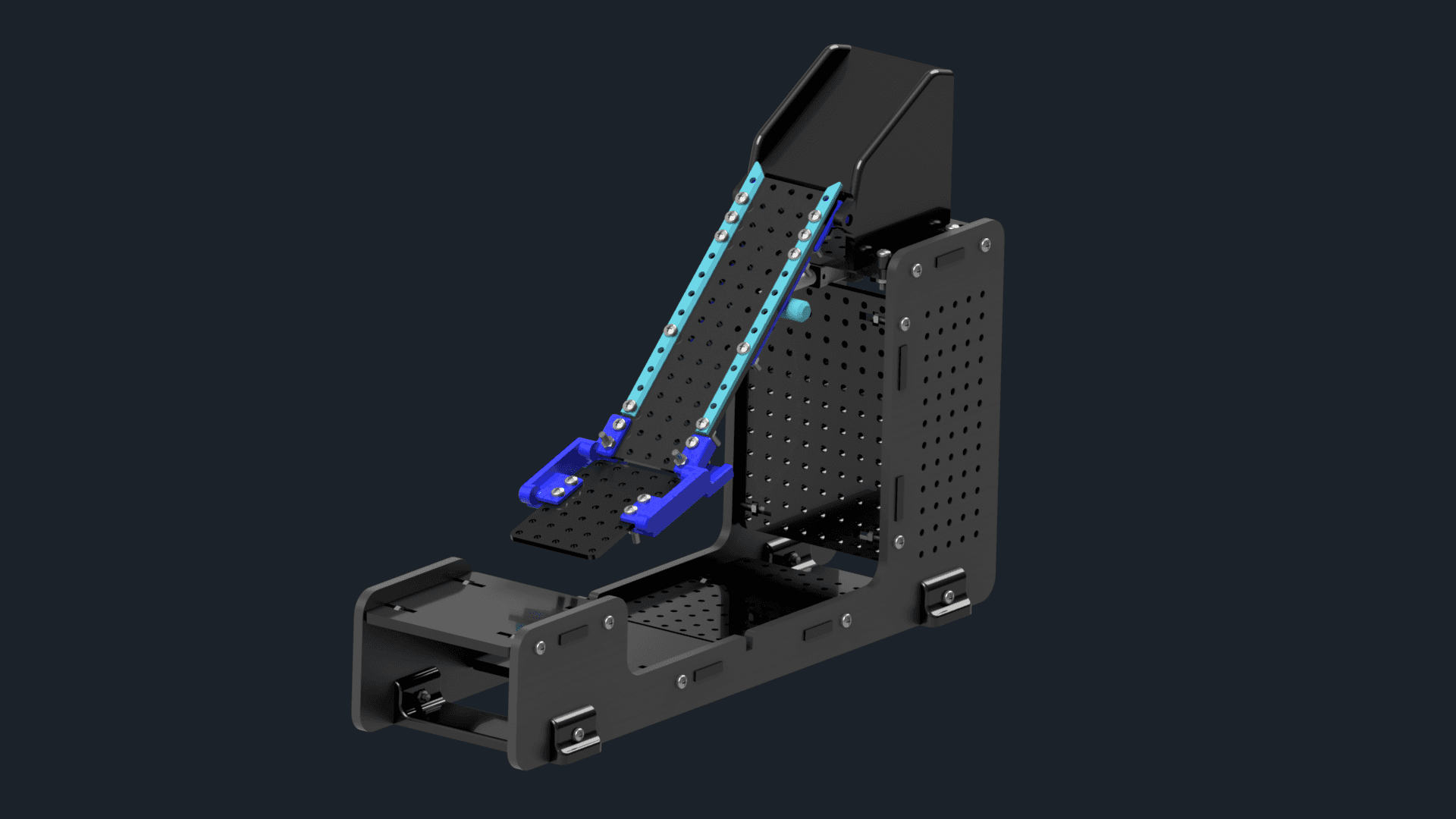
The team developed a python software program for efficient management of flight and luggage data; and utilizing a linear actuator, a physical prototype of a ramp mechanism for transporting luggage between two platforms. The software provided a clear, easy-to-understand graphical interface displaying airline data, including delays, overweight luggage, and layovers; facilitating smoother daily airport operations. The ramp mechanism used a linear actuator and modular components to ensure secure, efficient, and reliable luggage transportation.
Key accomplishments
Designing and testing a modular ramp mechanism using laser-cut acrylic (3 mm) and 3D printing.
Developing Python code on a Raspberry Pi to control the mechanism, incorporating reliability and ease of debugging.
Overcoming challenges in actuator placement and hinge design through iterations of testing, thanks to a purposefully designed modular system.
With the role of project manage, enhancing team collaboration contributing to successful project management and timely completion.
The final deliverables were a functional prototype that demonstrates a working mechanism involving a linear actuator, and a visually appealing python display using turtle to enhance passenger experience.
Reflection
Key Challenges and Improvements
Luggage Stability on the Ramp:
Issue: Lightweight 3D-printed luggage occasionally bounced and fell off the ramp.
Solution:
Lower the receiving hinge on the modified slide (on the top tamp) to ensure the ramp sits below the slide end, even with actuator imperfections.
Enhance the connecting joint to minimize ledges caused by imperfect extensions.
Railing Effectiveness:
Issue: The railings are ineffective as they were not tall enough
Solution:
Raise the railings by stacking metal nuts beneath the mounts.
Utilize the modular design’s flexibility for easy adjustments with existing screws and holes.
Team Performance and Outcomes
Project Execution:
The team successfully met all milestones as scheduled, as outlined in the Gantt chart (Appendix A).
Effective task delegation and utilizing individual strengths:
CAD Modeling: Madhav and I contributed extensively to creating accurate and efficient designs.
Coding: Avi spearheaded the development of the team’s code, ensuring its reliability and functionality.
Team Dynamics:
Micromanagement was not necessary as clear roles were assigned to each individual's abilities.
Strong communication and collaboration allowed the team to deliver a high-quality solution exceeding expectations.
This experience not only showcased our ability to solve technical problems but also reinforced the value of collaboration, adaptability, and a commitment to continuous improvement.
Conclusion
Summary
The team tackled the challenge of luggage mishandling with a modular transportation system combining innovative design and automation. Using laser-cut acrylic, 3D-printed components, and Python-driven control, we developed a prototype to enhance efficiency and reliability in airports.
While challenges like luggage stability and Q-Arm optimization remain, our effort showcased the potential of modular engineering to solve real-world problems.
Our success was due to the teamwork of me (Johnny Zhou), Madhav Parekh, Avi Raina, Shang Wu, and Yiyu Wang; and the most important idea we had: Modular Design.

Luggage Challenge
Luggage Challenge

